
Firearm Safety Guide for Parents
Being both a parent and a gun owner means carrying a double responsibility. Each stage of your child’s growth brings new and very different risks around firearms.
You can’t bubble-wrap the world, but you can build a plan that keeps your family safe from both outside threats and dangers at home. The key is building that plan on a solid foundation. Every accident prevented, every life saved, rests on three pillars of responsible firearm ownership: training, education, and tools.
And just like you wouldn’t choose the same firearm for every purpose, you wouldn’t handle safety the same way at every stage of your child’s life.
1. Training: The Foundation of Safety
In a crisis, you don’t rise to the occasion—you fall to the level of your training.
- Proficiency is paramount: Handling a firearm safely and confidently protects everyone.
- Stress-proof your skills: Training until safe habits are second nature will help you stay calm when life doesn’t.
- The start of safety: Responsibility begins with you before it can extend to your family.
- Capability precedes teaching. You can’t teach what you don’t know. Think of it as the parenting version of “put your oxygen mask on first.”
Training isn’t a one-and-done box to check; it’s the foundation you stand on every time you touch a firearm.
2. Education: Leading Your Family With Clarity
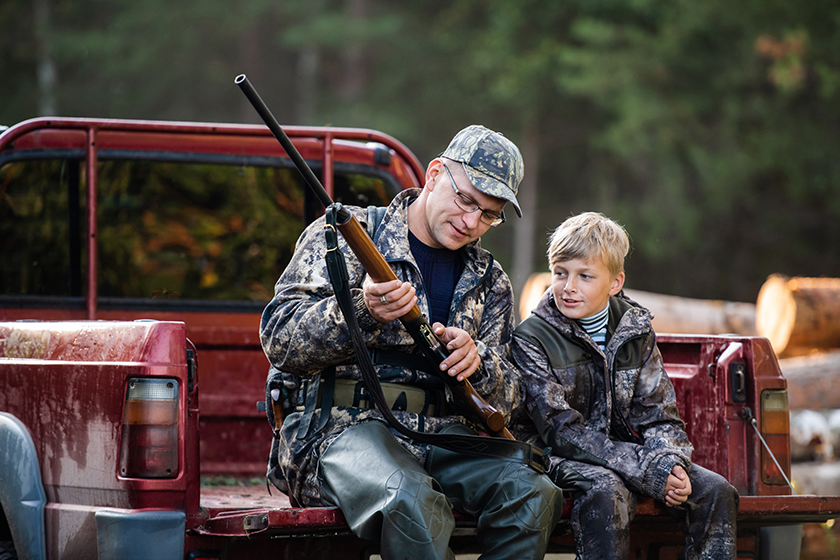
- Teach and train at every level: Education looks different for everyone under your roof. Your spouse may be an authorized user and a partner in your home defense plan. Your 10-year-old might shoot at the local range under supervision and know their role when a specific word or phrase is used. And your 3-year-old? They’re not ready for that yet, but they can still learn boundaries, like which things in the house are simply “hands off.”
- Age-appropriate lessons matter. A responsible gun owner doesn’t start their kid on a 12-gauge shotgun or a .308 rifle. Education begins with calm introductions, the right firearm, and the proper supervision.
- Demystify to reduce curiosity: The more mysterious something is, the more kids want to mess with it. Clear, honest conversations pull the curtain back and remove the dangerous allure of the unknown.
- Build respect, not fear: Fear fades, but respect sticks. Consistent, age-appropriate education helps create a lasting respect for firearms that grows as your kids do.
Education isn’t about a single “talk”—it’s about creating a culture in your home that balances safety, respect, and responsibility.
3. Tools: The Unbreakable Line of Defense
The firearm community understands the value of tools. We all have different firearms for different purposes, choose sights for specific conditions, and trust the right gear for the right job. Safety works the same way.
- The last line of defense: Training can fade, education can be ignored, but the right tool secures your firearm 24/7.
- Guard against every threat: A proper tool blocks not just accidents, but also rebellion, peer pressure, or a moment of overwhelming emotion.
- Different tools for different stages: Just as you wouldn’t hand your kid a 12-gauge on their first range trip, you wouldn’t rely on the same storage solution for a toddler as you would for a teenager. The tools evolve as your family does.
- Create the pause: The right tool places space between impulse and access, turning what could be a permanent tragedy into a prevented one.
- Engineered certainty: Real peace of mind comes from knowing your firearm is secure against unauthorized hands—always.
Tools are the physical guarantee in a plan where everything else depends on memory, maturity, and judgment.