
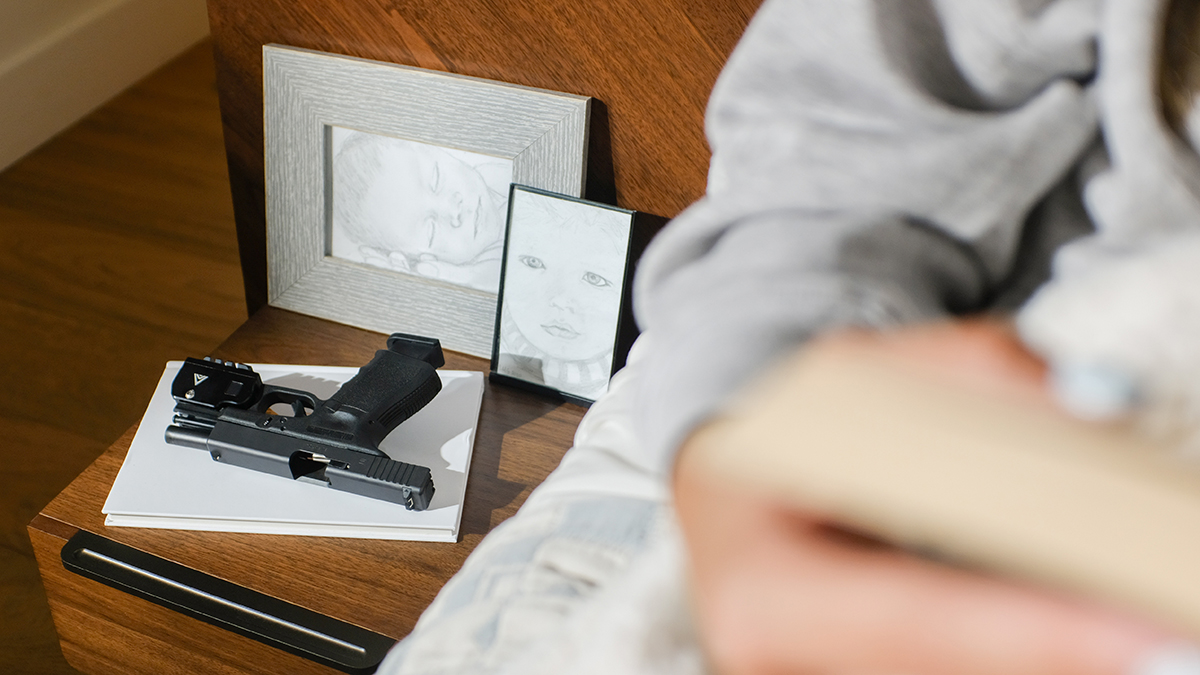
Gun owners get lectured about storage more than any other group in America, usually by people who have never had to think through the actual trade-offs. So let’s start somewhere different.
In a 2020 study published in Clinical Pediatrics, researchers surveyed 297 parent–child pairs who came through pediatric emergency departments in Atlanta. Among other things, they asked parents whether they check on firearms in homes their children visit. Fifty-five percent of gun-owning parents said yes, compared with 14% of non-gun-owning parents. Gun owners in that sample were roughly four times more likely to ask the question. That tracks with how most gun owners actually behave: safety is not an afterthought, it’s a habit.
Which is what makes the next finding from the same study worth sitting with.
Parents and children completed their surveys independently. Eleven percent of gun-owning parents thought their child knew where the firearm was kept. Fifty-three percent of those children said they knew. The study also found that 59% of the children could not distinguish a toy gun from a real one in a picture.
One caveat, and it matters: this is a single study of 297 families in one city, drawn from a pediatric emergency department population. It is not a national statistic, and anyone presenting it as one is overselling it. But the shape of the finding is the useful part. The hard problem in bedroom firearm storage isn’t caring. It’s the assumption most people build their plan around, “my kid doesn’t know where it is,” that is the single variable they’re most likely to be wrong about. That’s a perception gap, not a character flaw. You cannot fix it with more diligence, because diligence is not what’s failing.
So the question is not whether you’re responsible. It’s which set of trade-offs you want to live with.
The Real Trade-Off Nobody Names
Bedroom firearm storage is a three-way tension:- Access. How fast and how reliably can you get to it in the dark, half-awake, under stress?
- Security from people inside the house. Kids, teenagers, grandkids, guests, contractors, house sitters, someone’s boyfriend.
- Security from theft. A burglar with time and no one home is a different adversary than a curious nine-year-old.
The Five Options
1. Nightstand Drawer, Unsecured
How it works. The firearm goes in the drawer. That’s it. This is the most common real-world arrangement in American bedrooms, and pretending otherwise is useless. People do it because it’s the only option that requires zero cost, zero setup, and zero interposed steps between waking up and having the firearm in hand. What it gets you. Unmatched access. Nothing else on this list is faster. What it costs you. No security from anyone inside the house, and none from theft. Nightstands are the first place burglars check, and a drawer is not a barrier to a child who has already figured out where it is, which, per the study above, is more likely than most parents assume. The failure mode isn’t dramatic; it’s the ordinary afternoon when someone who shouldn’t have access has it. If this is your current setup and you’re reading this article, you already know the trade. The point isn’t to shame you into a different one. It’s that the drawer is only a reasonable choice if the “nobody else knows” assumption holds, and that’s the assumption most likely to be wrong.2. Bedside Quick-Access Lockbox or Biometric Safe
How it works. A small steel box on or beside the nightstand, opened by fingerprint, keypad, or a mechanical push-button code. Some models even have mounts for the car and furniture. Most have a battery backup and a manual key override. This is the mainstream answer for a reason. It’s a genuine solution to the core problem: it interposes a real barrier between the firearm and everyone in the house who isn’t you, without moving the firearm out of the bedroom. What it gets you. Meaningful security from children and casual access by guests. Access that’s fast enough for most people’s comfort. Wide selection at a wide range of prices. Many models let you enroll a spouse. What it costs you. Three honest limits. First, these are containers, not safes, most are light enough to be carried off by a thief, unless bolted or cabled down (many include a mounting kit or security cable; use it). Second, they add a step, and any step can fail: dead battery, cold fingers, a keypad you fumble in the dark, or a lid orientation you didn’t practice. Third, the firearm is secure only when it’s inside. The box does nothing while the gun is on the nightstand, in your hand, or in transit to the range. The fix for the second problem is practice, not a better product. Whatever you buy, open it enough times in the dark that it becomes automatic.3. Under-Bed Safe
How it works. A wide, shallow safe that slides under the bed frame, usually opened by keypad or key, often with the option to bolt to the floor or the frame. What it gets you. More capacity than a bedside box, room for multiple firearms, magazines, documents. Bolt-down options give it real theft resistance, which most bedside containers lack. It’s also out of sight, which has its own value: a device nobody notices is a device nobody investigates. What it costs you. Slower access. You have to reach, slide, and orient before you open. Bed height and frame design determine whether this is a minor inconvenience or a genuine problem, and you won’t know until you try it. Bolting it down means drilling, which rules it out for a lot of renters.4. Bedside Holster or Magnetic Mount
How it works. A holster or magnet mounted to the bed frame, headboard, or nightstand side, holding the firearm in a fixed, known position. What it gets you. Access comparable to the open drawer, with better consistency, the firearm is always in exactly the same orientation, which is worth more under stress than people expect. Cheap, easy to install, no batteries, no electronics, nothing to fail. What it costs you. Let’s be direct: no security whatsoever from a child, a teenager, a guest, or a thief. A mount holds the firearm in place. It does not restrict who can take it. Anyone who finds it can pick it up. This makes it a defensible choice in exactly one situation, a household where no one else has access to the bedroom, ever, and a poor one in every other. It is not a middle ground between the drawer and the lockbox. On the security axis, it’s the same as the drawer.5. Biometric Slide Lock on the Pistol Itself
How it works. A device that attaches to the pistol, typically the accessory rail, and physically retains the slide so the firearm cannot cycle. Removing the lock requires the authorized user to use a fingerprint. This is a different design philosophy from the other four. Every other option secures a location and asks you to keep the firearm inside it. A slide lock secures the firearm, and the security travels with it, in the nightstand, in a bag, in the truck, in a hotel room, in a house you’re a guest in. What it gets you. Security from unauthorized handling that isn’t dependent on the gun being put back in the right place. That closes the gap the lockbox can’t: the hours when the firearm is out of the container. It also works in a rental where you can’t drill anything, and it doesn’t take up nightstand real estate. What it costs you. It is not a safe, and offers no theft protection. A thief who takes the pistol takes the lock with it. It also requires an accessory rail, which means it’s a pistol solution and not an option for shotguns or rifles. And like any device with electronics or moving parts, it introduces a component that can fail if the user forgets to charge it, which is true of every option on this list except the bare drawer.Comparison Table
| Option | Access | Secure from kids/guests | Secure from theft | Typical cost | Main failure mode |
|---|---|---|---|---|---|
| Nightstand drawer, unsecured | Fastest | None | None | $0 | Someone in the house already knows where it is |
| Bedside lockbox / biometric safe | Fast, one step | Good | Limited unless anchored | $60–$400 | Dead battery, fumbled entry, or gun left outside the box |
| Under-bed safe | Moderate | Good | Good if bolted down | $150–$600 | Awkward reach; can’t bolt in a rental |
| Bedside holster / magnetic mount | Fastest | None | None | $20–$60 | Anyone who finds it can take it |
| Slide lock on the pistol | Fast, one step | Good | None | $150–$400 | Component failure; doesn’t stop the gun being carried off |
How to Actually Decide
Skip the product reviews for a minute. The decision is driven almost entirely by who else is in your house and what you’re allowed to modify. Find your situation below.
Young children in the home (roughly under 10).
The 59% toy-versus-real finding is the relevant one here. At this age the problem isn’t malice or even curiosity about guns specifically, it’s that a firearm may not register as categorically different from a toy. Prioritize a real barrier over speed. A bedside lockbox or an on-firearm lock both accomplish this. An unsecured drawer or an open mount does not.Teenagers in the home.
Different problem. Teenagers are capable of deliberate, informed access, and they know your house better than you think. They also have friends over. Prioritize a barrier that doesn’t depend on secrecy or on your own consistency, anything relying on “they don’t know it’s there” is not a plan for a teenager. This is also the situation where a lock that stays with the firearm has an edge, because teenagers notice patterns, including the times the gun isn’t in the box.Occasional guests, grandkids, or contractors.
Your baseline may be genuinely fine most of the time, and the risk is episodic. Two workable approaches: keep a secured setup permanently so there’s nothing to remember, or have a specific, written, non-negotiable routine you execute before anyone arrives. The second only works if it’s actually written down and actually automatic. Most people overestimate how reliably they’ll remember. If you’re honest with yourself and the answer is “sometimes I’d forget,” choose the permanent option.No one else in the home, ever.
Your constraint is theft, not access by others. An anchored safe or an under-bed safe bolted down does more for you than a biometric lockbox that a burglar can carry to his car. This is also the one situation where a mount or an open drawer is a coherent choice, and you should weigh it against the fact that stolen firearms don’t stay stolen. They circulate.Renting, or can’t bolt anything down.
Anchoring is off the table, so the anti-theft options narrow considerably. Your realistic choices are a container secured with a cable to something immovable, or a lock that lives on the firearm itself. Also worth considering: a firearm secured on your person or in a bag is more portable than a bolted safe if you move often.A note that applies to everyone:
Requirements vary by state, and some states have specific storage rules. Check your own state’s requirements. Don’t rely on an article, and don’t rely on what someone told you about a neighboring state.What None of This Does
A few things worth saying plainly, because the storage conversation tends to imply more than it delivers. No storage method is a guarantee. Not a lockbox, not an under-bed safe, not a slide lock, not a gun vault bolted into concrete. Every one of these can be defeated, forgotten to charge, or left unsecured by the user. Anyone telling you a product makes it impossible for a child to access a firearm is overstating what a product can do. The honest claim is that a barrier makes unauthorized access meaningfully harder and less likely, which is worth a great deal, and is not the same as impossible. Storage doesn’t replace handling rules or training. Where the gun sits at night has nothing to do with whether the people in your house know the four rules, whether you’ve trained under stress, or whether you’ve talked to your kids about what to do if they encounter a firearm somewhere else. Those conversations do work that no device does. Theft and access are separate problems with separate solutions. They get discussed together because they both fall under “storage,” but the countermeasures barely overlap. Anchoring and mass solve theft. Authorization solves access. A product that’s excellent at one may do nothing for the other, and buying for one while assuming you’ve solved both is the most common mistake in this category. Nothing here tells you what condition to keep your firearm in. That’s your decision, informed by your household, your training, and your local law. This article is about securing the firearm, not about how you choose to keep it.Where the B.O.S. Lock Fusion Fits
Disclosure: we make this product. Everything above applies whether or not you buy anything from us, and the decision framework doesn’t require our product to work. Here’s the specific, restrained version of where ours sits in the list. The Fusion is the fifth category, a biometric slide lock. It mounts to a pistol’s accessory rail and retains the slide; a registered fingerprint releases it. It holds up to 20 enrolled fingerprints, which covers a household. It includes an integrated white light and green laser, so it occupies the rail slot rather than competing with it. It is fully offline: no Bluetooth, no wifi, no app, no account, no connection of any kind. Battery life is approximately nine months, with an LED low-battery alert. Construction is hard-coat anodized aluminum with heat-treated, DLC-coated stainless steel. It’s covered by three issued U.S. patents with two more pending, and it’s certified by the California Department of Justice as a Firearm Safety Device. Around $379, with 30-day returns. The limits, plainly:- It is not a safe and offers no theft protection. If someone takes the pistol, the lock goes with it. If theft is your primary concern, an anchored safe is the better tool, and we’ll say so. Don’t worry, we see this limit and it is on the future accessory development board.
- Pistols only. It requires an accessory rail. It does not fit shotguns or rifles. Check the compatibility guide before buying. Again, we see this limit and have the patent and initial designs to move this technology into long guns.
- It runs on a battery, and you have to keep it charged. About nine months per charge, rechargeable, with an LED low-battery alert. Worth being clear about what that battery is doing: the Fusion isn’t a lock you’ve added on top of your light and laser, it’s all three in one housing, on one charge.
- It doesn’t replace training, handling rules, or judgment, and it does not make unauthorized access impossible. Nothing does.
The Takeaway
There is no single “right” place to keep a gun in the bedroom. There is only the option that fits your household, your training, your local laws, and the risks you are actually trying to manage. A safe, lockbox, mount, or biometric slide lock each solves a different problem. None of them eliminates every risk, and none of them replaces training, judgment, or safe handling. Responsible firearm storage works best in layers. For some owners, that may mean a quality safe. For others, it may mean a quick-access lockbox, a secured routine, or an on-firearm access-control device like Fusion. For many, the best answer may be a combination of tools used for different jobs. The goal is not perfection. The goal is a plan that you will actually use, one that helps reduce unauthorized access while preserving the access you need.If you are considering where Fusion fits into your bedroom storage plan, start by reviewing the Fusion compatibility guide, FAQs, and product details before deciding whether it is the right tool for your household.